The actual exported files
Strunk’s Style for Business Success: a real workbook sample
Inspect a source-based workbook with its real outline, page previews and PDF, EPUB and DOCX files, including the fillable PDF answer appendix.
Open the actual book.
These are generated outputs with their original disclosures. Read the files and judge the writing, layout and usability for yourself.
Strunk's Style for Business Success
Written by SuperEbook with Claude Sonnet 5.5 from William Strunk Jr.’s The Elements of Style (1918), in the public domain. Unedited.
18,346 words · 165 PDF pages · 3.2 minutes for this sample
Source: The Elements of Style by William Strunk Jr.. Public-domain source.
The generated chapter plan
- The Foundation of Plain English for Professionals
This introductory chapter explains why clear, concise writing is paramount for consultants and founders, and introduces the foundational principles of effective style. It sets the stage for applying classic guidance to modern business communication.
- Precision in Possessives and Punctuation Series
This chapter covers the correct formation of possessives and the crucial use of commas in a series to ensure clarity and professional polish. It includes exercises for consistent application in business documents.
- Mastering Parenthetic Expressions
Readers will learn how to correctly enclose parenthetic expressions with commas, ensuring smooth reading and preventing ambiguity in their professional writing. Exercises focus on distinguishing essential from non-essential information.
- Conjunctions and Independent Clauses: Joining Ideas Clearly
This chapter explains the proper use of commas with coordinating conjunctions and how to avoid comma splices between independent clauses. It helps craft well-structured sentences in reports and emails.
- Avoiding Sentence Fragments and Dangling Modifiers
Addresses common grammatical errors like breaking sentences in two and misplacing participial phrases, which can lead to confusion and undermine professionalism. Practical exercises demonstrate how to rephrase for clarity.
- The Unitary Paragraph: One Idea Per Topic
Guides readers in structuring paragraphs with a single topic and clear topic sentences, enhancing readability and logical flow in proposals and reports. It emphasizes the principle of 'one paragraph to each topic'.
- Active Voice and Positive Statements for Impact
Focuses on using the active voice for direct and vigorous writing, and framing statements positively for impact and clarity. This chapter helps make business communications more persuasive and authoritative.
- Concrete Language and Eliminating Needless Words
Emphasizes the power of definite, specific, and concrete language, alongside the essential practice of omitting superfluous words. This chapter helps readers cut through jargon to convey messages powerfully.
- Sentence Variety and Parallel Construction
Explores how to vary sentence structure to avoid monotony and the importance of parallel construction for expressing co-ordinate ideas clearly. It helps create engaging and easily digestible content.
- Keeping Related Words Together and Emphatic Endings
Instructs on placing related words in close proximity and positioning emphatic words at the end of sentences for maximum effect. This enhances the precision and persuasive force of written communication.
- Applying Style to Proposals: Clarity for Conversion
Integrates all learned principles into crafting compelling and unambiguous proposals that clearly communicate value and lead to client engagement. Exercises focus on typical proposal sections and language.
- Applying Style to Emails: Precision for Professionalism
Focuses on applying concise and clear writing to client emails, ensuring professional communication that is easily understood and acted upon. It addresses common email scenarios and challenges.
- Applying Style to Reports: Structure for Impact
Guides the reader in structuring and writing clear, specific, and impactful reports that effectively convey information and recommendations. It applies principles to executive summaries, findings, and recommendations.
- Sustaining a Clear Writing Practice
Provides strategies and habits for maintaining and continuously improving clear writing skills in ongoing professional work. This chapter offers tools for self-assessment and long-term development.

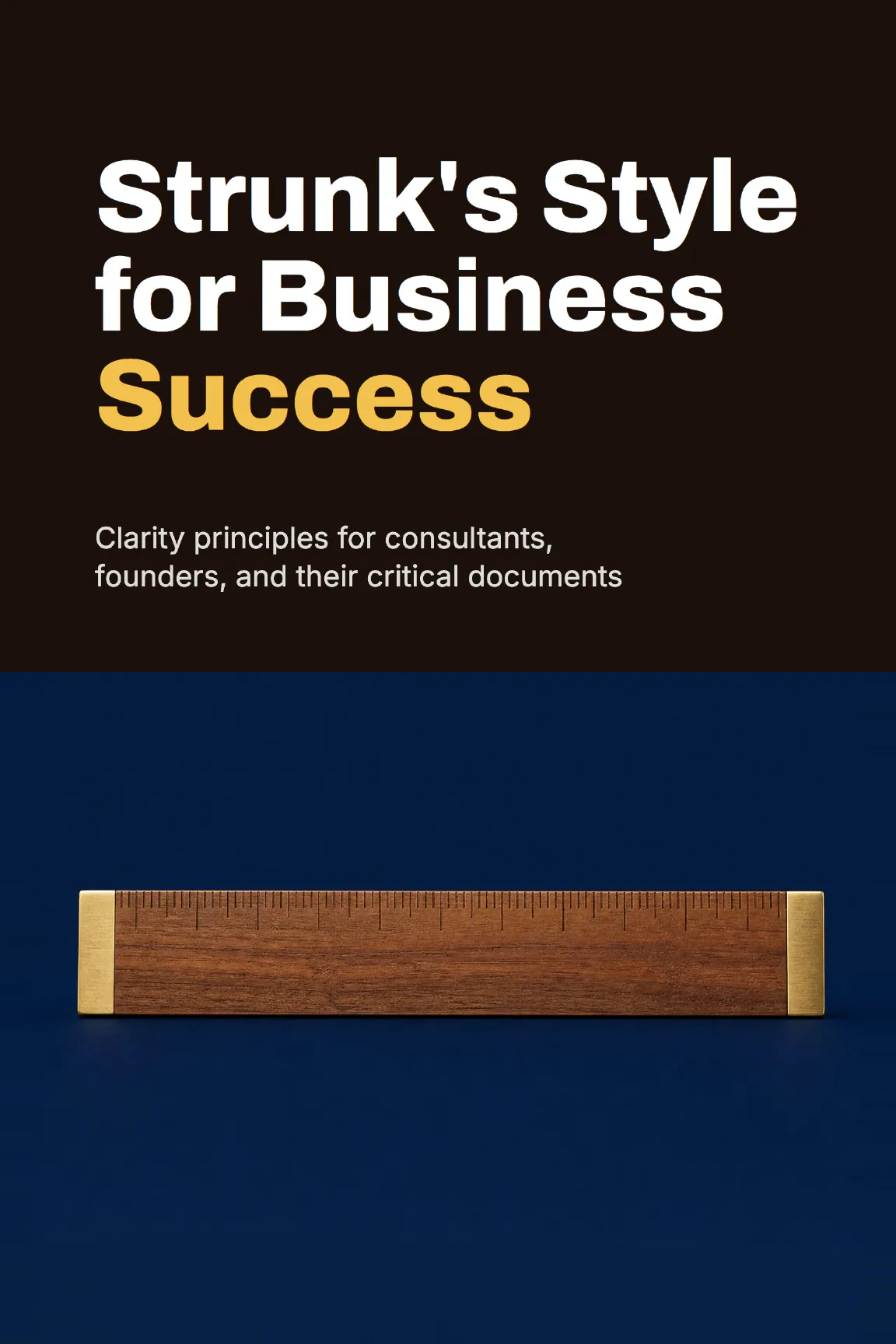
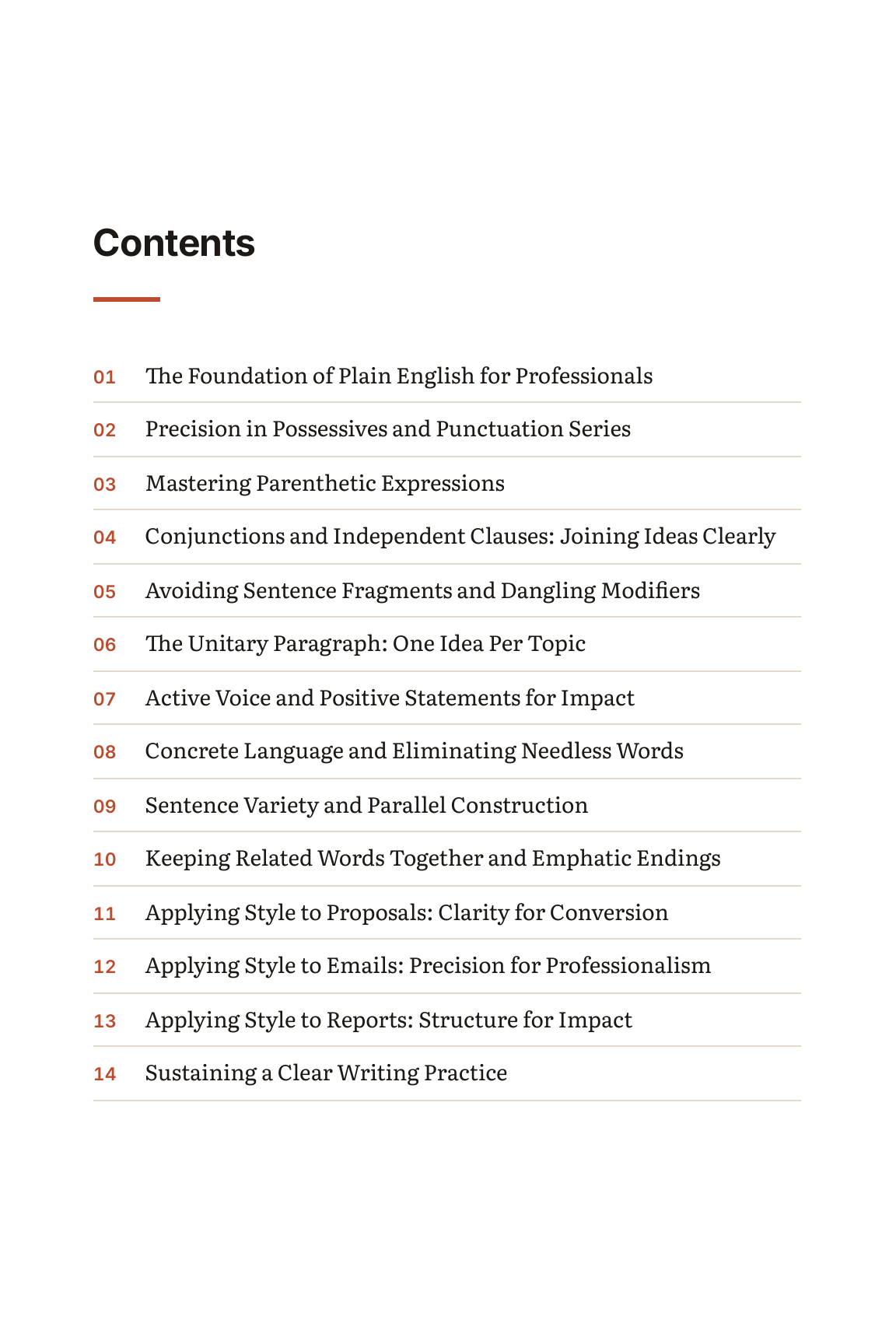
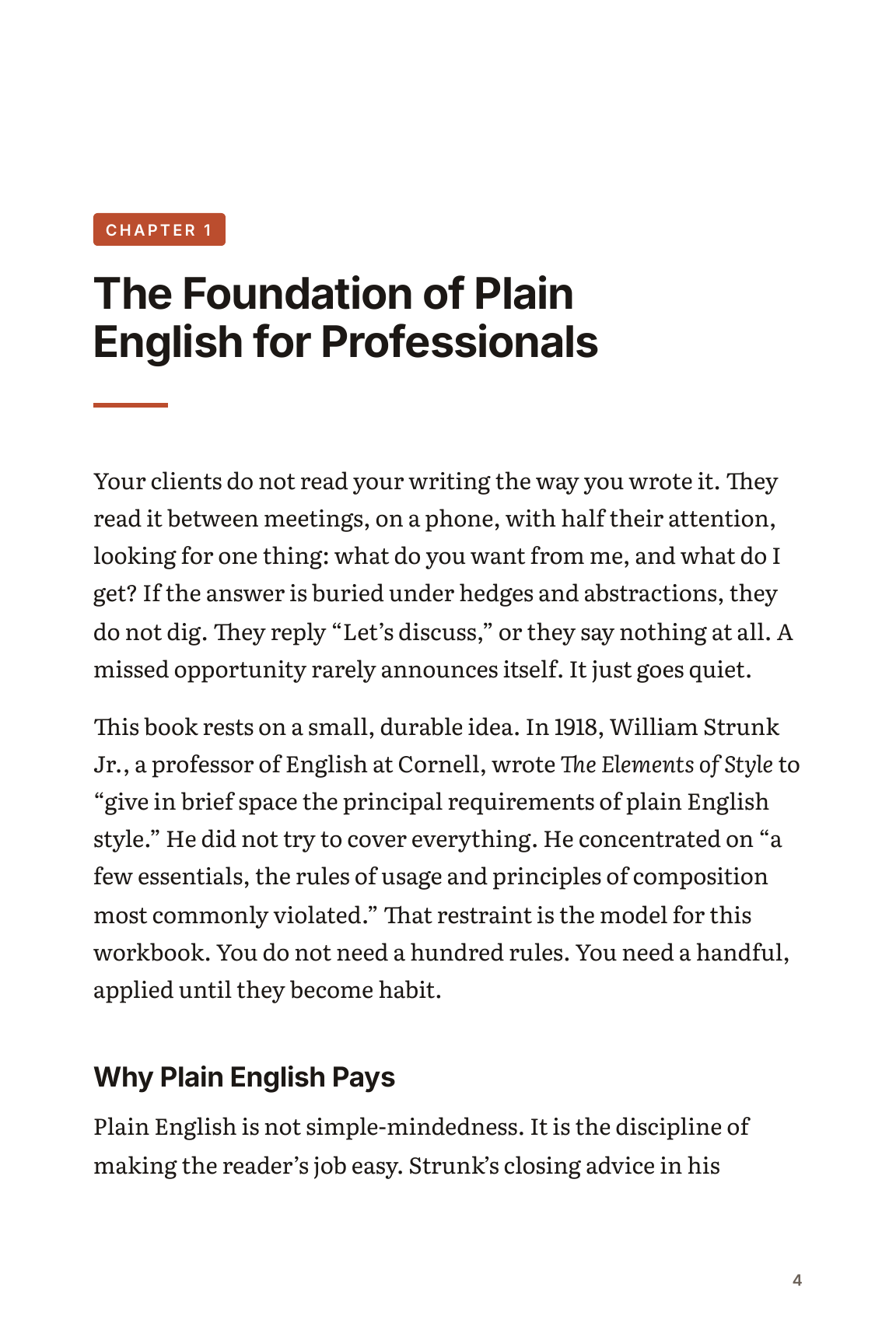
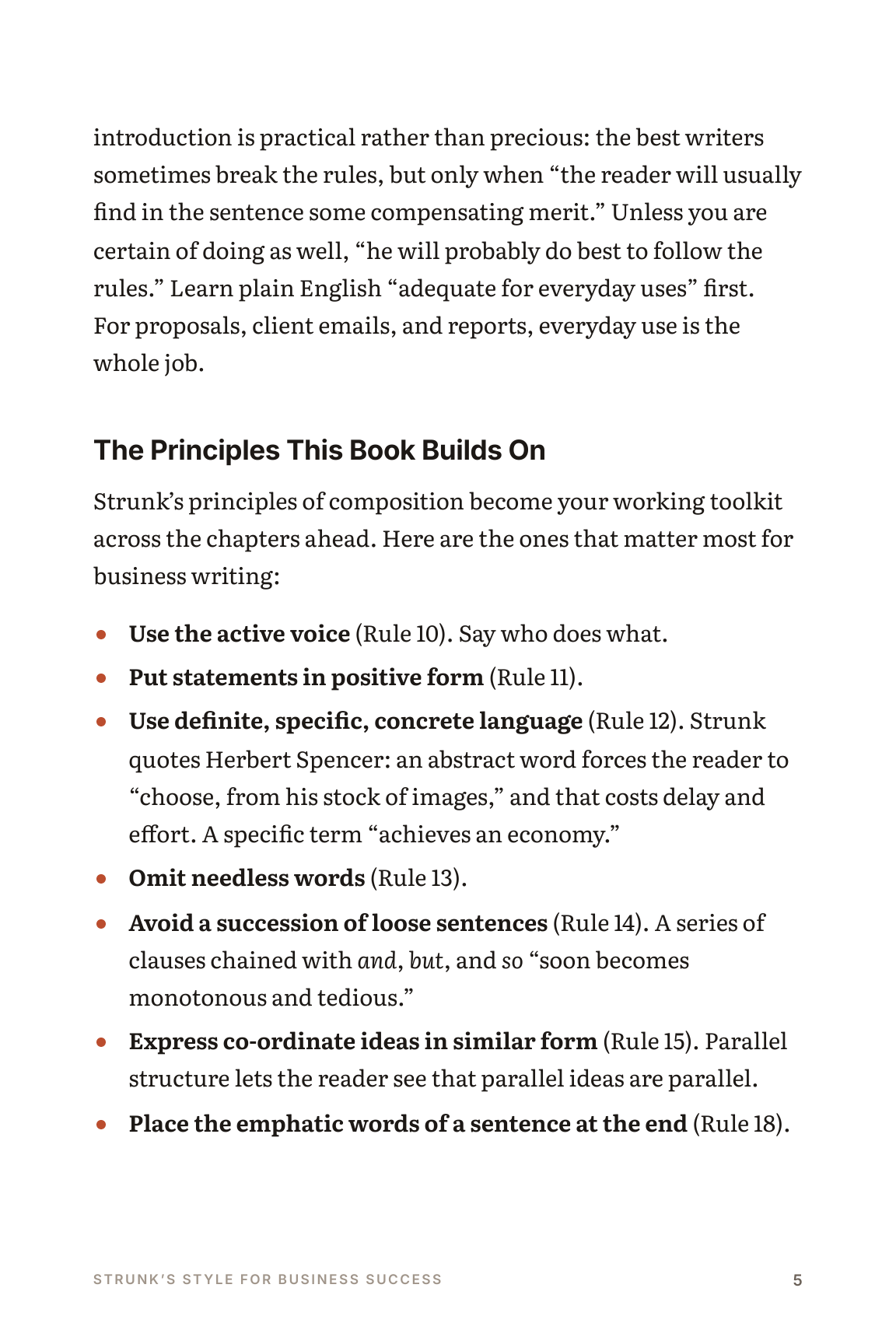
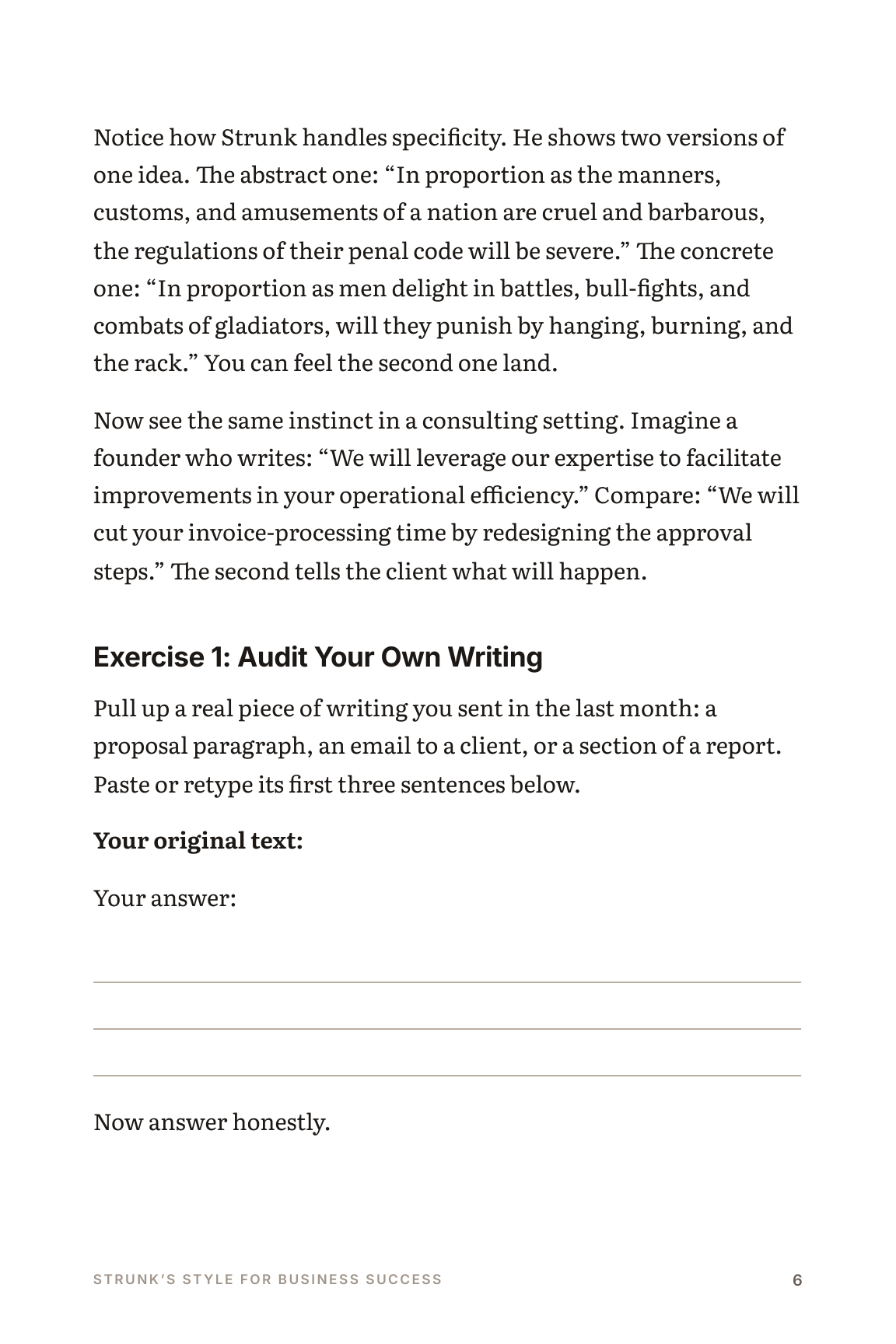
Actual exported pages. Select a page to inspect the full image.
Continue from here
The SuperEbook library
Real books made with SuperEbook
Inspect actual generated books, their source material, outlines and downloadable files. No invented customer stories or placeholder book previews.
Read moreFrom your material to a book
An AI ebook generator that starts with your ideas
Turn notes, teaching material or an idea into an editable ebook. Review a free outline, then write and export PDF, EPUB and DOCX with SuperEbook.
Read moreGive your next book a clear beginning.
Bring an idea or your own prepared material. Review a free plan, then decide what to write.
Start your book