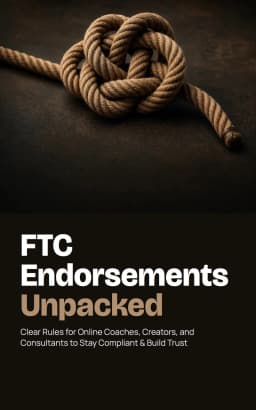
25 Lead Magnet Ideas, by Type and Who They Suit
Twenty-five lead magnet ideas, grouped by format, each with who it can suit and what to build it from. The format matters less than a specific promise, but it shapes what the reader expects.
By Shri and Sarath · 7 min read · Updated 11 October 2026 · Facts checked 11 October 2026
A good lead magnet gives the reader one specific win quickly and points naturally at what you sell. The format is secondary, but it sets expectations, so this list groups ideas by type and says who each can suit.
Nothing here is a ranking or a promise about results. We have no data on which idea performs best for you, and neither does any list. Treat each entry as a candidate to test with your own audience. For the build itself, see how to make a lead magnet.
Checklists: the quickest to make
- The pre-launch checklist. Everything to verify before a launch, listing or event. Can suit anyone whose clients repeat a high-stakes task.
- The provider audit. A checklist a client uses to grade their current accountant, agency or trainer. Can suit service businesses, since it surfaces the gaps you fix.
- The mistake list. The 12 mistakes in every first-time X. Short, confident and opinionated; can suit consultants whose value is spotting patterns.
- The weekly routine card. One printable page with the routine you teach. Can suit fitness, productivity and finance coaches.
Short guides: a sensible default
- The one-problem guide. A few thousand words that solve one narrow problem completely. Can suit almost anyone, and shows how you teach.
- The first-30-days guide. What to do in the first month of a new role, business or habit. Can suit audiences at a starting point.
- The jargon decoder. Plain-English explanations of the 20 terms your clients find confusing. Can suit legal, financial, medical and technical fields.
- The comparison guide. X vs Y vs Z: which fits your situation. Can suit readers who are already deciding.
Workbooks: for coaches and anyone who teaches by doing
- The self-diagnosis workbook. Ten prompts that lead the reader to name their real problem in their own words.
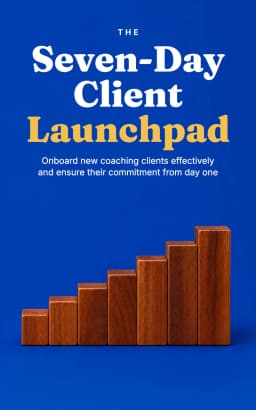
- The 90-day plan builder. Fill-in pages that produce a plan, which can lead naturally to a conversation about help with it.
- The values or priorities sort. A card-sort style exercise on paper. Can suit life, career and leadership coaches.
- The ideal-client worksheet. For anyone who sells to businesses; it is often the first exercise in a paid programme anyway.
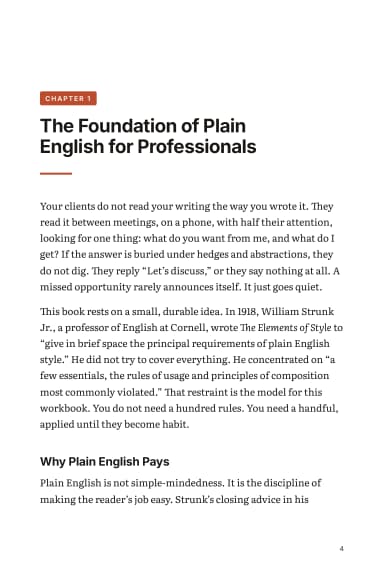
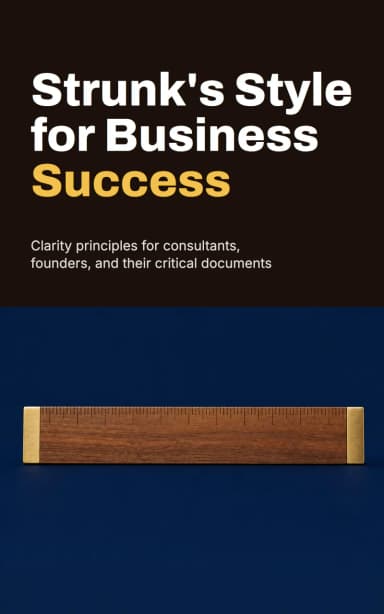
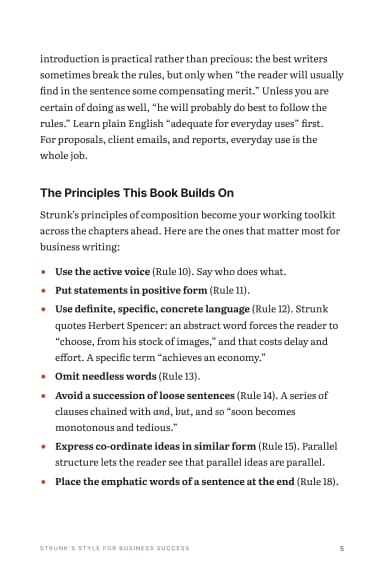
A workbook costs 35 credits to write in SuperEbook. Here is a real one, written from a public-domain text and unedited, to show the format:
For: Give my course a workbook
Interactive Workbook · 165 pages
Strunk's Style for Business Success
From William Strunk Jr.’s The Elements of Style (1918), in the public domain, split into 33 passages.
Written by Claude Sonnet 5.5 in 3.2 minutes, unedited · 18,346 words · 35 credits to write
Swipe files and templates
- The email sequence swipe file. The actual emails, with a note on why each is built the way it is.
- The proposal or quote template. Annotated. Can suit freelancers and agencies.
- The scripts pack. Sales calls, difficult conversations, discovery questions.
- The spreadsheet. A budget, tracker, calculator or planner. This one is a file you build in a spreadsheet tool; an ebook can explain how to use it.
Calculators and quizzes
Be clear about what an ebook tool does here: SuperEbook writes and exports ebooks. It does not build calculators, quizzes or result pages, so these three ideas need a separate tool, with an ebook as the companion that explains the result.
- The cost-of-the-problem calculator. The reader enters three numbers and sees what the problem costs them.
- The readiness score. A short scored quiz with a result page that suggests which of your offers fits.
- The pricing recommender. For any field where clients tend to underprice.
Reports and data
- The small original survey. Ask your list or community ten questions and publish what they said. Only publish what you actually collected, and say how many people answered.
- The benchmark report. A look at what 'good' means for a metric your clients care about, built from data you can name and cite.
- The teardown. Analyse five public examples (websites, ads, listings) and show what works and why. It demonstrates your eye.
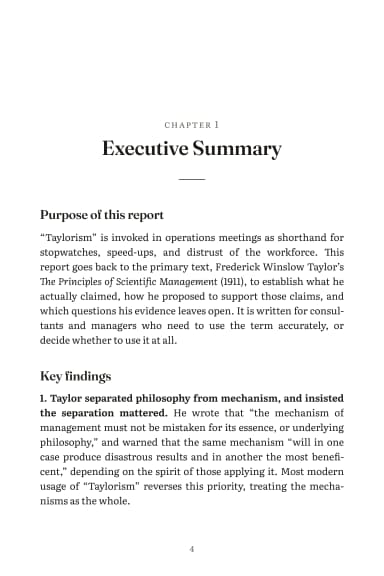
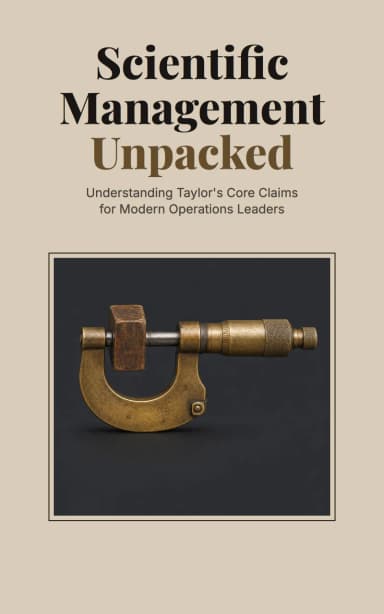
A research report costs 30 credits. Because SuperEbook writes from the material you give it, a report is only as good as the data in that material. Here is one, unedited:
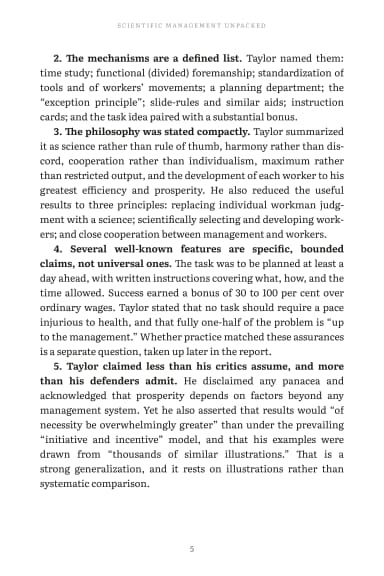
For: Win B2B leads
Research Report · 58 pages
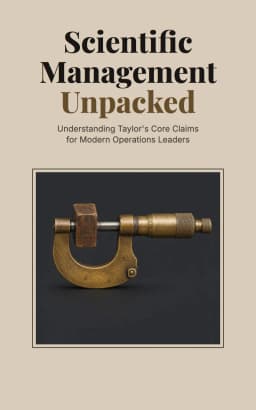
Scientific Management Unpacked
From Frederick Winslow Taylor’s The Principles of Scientific Management (1911), in the public domain, split into 87 passages.
Written by Claude Sonnet 5.5 in 2.5 minutes, unedited · 11,161 words · 30 credits to write
Course-adjacent ideas
- The course companion chapter. The first chapter of your course as a readable PDF: a true sample of what buyers get.
- The watch-along workbook. A workbook paired with a free video or webinar, so the video has something to anchor to.
- The reading list with notes. The ten books or resources you recommend, with a paragraph each on what to take from them. Can suit thought leaders.
How to choose among them
Three filters, in this order:
- What is your paid offer? The magnet should make it the obvious next step. Coaching might pair with a workbook or diagnosis; a done-for-you service with an audit or teardown; a course with a companion chapter or watch-along.
- What material do you already have? A webinar transcript can become a guide; it can't become a survey. Start from what exists.
- What does your audience actually download? Look at your own past emails and posts rather than assuming. Which got replies?
A webinar or talk recording (transcribed)
- Try building
- One-problem guide (5), mistake list (3), first-30-days guide (6)
A course
- Try building
- Companion chapter (23), watch-along workbook (24), self-diagnosis workbook (9)
Client onboarding documents or FAQs
- Try building
- Jargon decoder (7), provider audit (2), pre-launch checklist (1)
Templates you reuse
- Try building
- Swipe file (13), proposal template (14), scripts pack (15)
A newsletter archive
- Try building
- Comparison guide (8), reading list (25), teardown (22)
A community or list you can poll
- Try building
- Small survey (20), benchmark report (21)
Make the promise narrow
Every idea above gets more useful when you add a specific audience and moment. Not the pre-launch checklist but the pre-launch checklist for a second shop opening. A narrow promise is easier to write well and easier for a reader to recognise as theirs. If you serve two segments, you can make a version for each; a lead magnet costs 25 credits in SuperEbook, and the 50 free credits a new account starts with cover ≈ 2 lead magnets or 1 how-to guide.
Planning is free: you get three title options, a brief and an editable chapter outline before anything is written. Each chapter is then written from the passages of your uploaded material that fit it, to the plan you approved. The material has to be text (TXT, Markdown, PDF or DOCX), so transcribe any recording first.
If an idea outgrows a lead magnet
Some ideas, such as a comparison guide or a course companion, turn out to be books. If you decide to publish one on Amazon KDP, its help pages say KDP accepts EPUB (provided it meets the Kindle Publishing Guidelines) and Word DOC/DOCX manuscripts, and recommend checking an EPUB in Kindle Previewer first. SuperEbook exports both EPUB and DOCX.
Test an idea before you build it
Show the title to a few people in your target audience and ask: if this landed in your inbox, would you open it today or save it for later? 'Later' suggests a nice-to-have; try rewriting the title until the answer is 'today'. A plain-text post asking who wants it works too. Replies from strangers tell you more than likes from friends, though this is a rule of thumb, not a measurement.
Do this now
- Write your paid offer in one line.
- Pick the two ideas above that lead most directly to it.
- Choose the one you already have source material for.
- Add an audience and a moment to the title.
- Ask three people in your audience whether they would open it today.
- Build it, then set up the page and delivery.
Write it from your own material.
Plan a book free and see the outline before you spend a credit.
Try SuperEbook free