1. Choose a question you already hear
Write down five questions that come up before someone buys from you. Select one that can be answered with a small action: a checklist to prepare for a kickoff, a decision worksheet or a seven-day practice plan. Avoid a title that promises a complete transformation from a short PDF.
For this walkthrough, the job is helping a new coaching client arrive prepared for their first week. That gives the guide a concrete beginning and end, and gives you a clear test: can the client complete the preparation without asking you to explain the document?
2. Collect useful material
- Write the steps you currently explain in a call or email.
- Add one worked example and explain why you made each choice.
- List mistakes that prevent the first useful result.
- Remove names, private client details and material you do not have permission to reuse.
3. Plan the guide before writing it
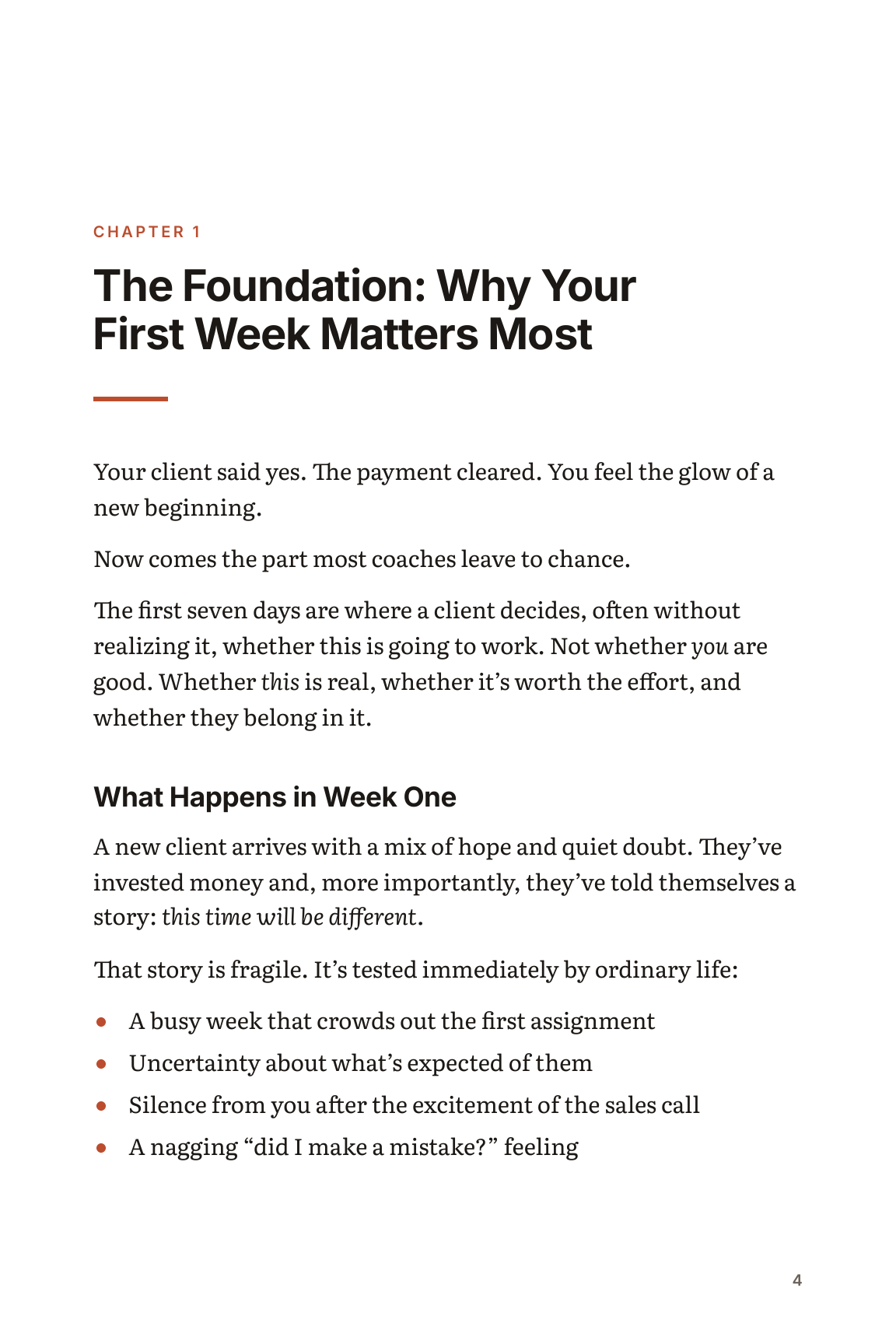
In SuperEbook, describe the reader and choose the lead magnet format. Add your prepared notes, then review the free outline. A workable sequence is: what to prepare, one example, the preparation checklist, troubleshooting and the next step. Remove a chapter if it only restates the introduction.
The public coaching sample is an example of generated output, not a tested marketing campaign. Read its chapter plan and final PDF to decide what you would tighten for your own audience.
4. Make the invitation specific
Set one CTA that follows naturally from the result: book an introduction, reply with a completed worksheet or start a related lesson. Use a destination you control. In the exported PDF, test the link on both a phone and a desktop reader.
Export the file and upload it to your existing email delivery service. Test the opt-in journey with your own address. Measure whether subscribers use the guide and take a useful next step; downloads alone do not establish that the offer works.