Make the first useful result small
Choose a guide that helps a prospect prepare or make a decision. Avoid promising revenue growth that the document cannot establish. These ideas are prompts for customer conversations, not evidence that a niche is profitable.
Eight starting points
- A kickoff preparation guide: what to gather before the first coaching session.
- A weekly review workbook: what happened, what was learned and what to change next week.
- A priorities worksheet: compare a few possible projects against explicit constraints.
- A delegation brief: define an outcome, owner, deadline and feedback loop.
- A client interview guide: neutral questions for learning how customers describe a problem.
- A service-scope checklist: clarify deliverables, exclusions and communication expectations.
- A meeting reset guide: replace a vague recurring meeting with a useful agenda and decisions.
- A first-month reflection book: document actions and observations without inventing performance claims.
Example outline: a better kickoff
An illustrative outline is: what the engagement will cover; information to prepare; questions for the first session; a one-week action plan; and a review checklist. End with one clear invitation that fits your own service. Use hypothetical or anonymized examples, and say which they are.
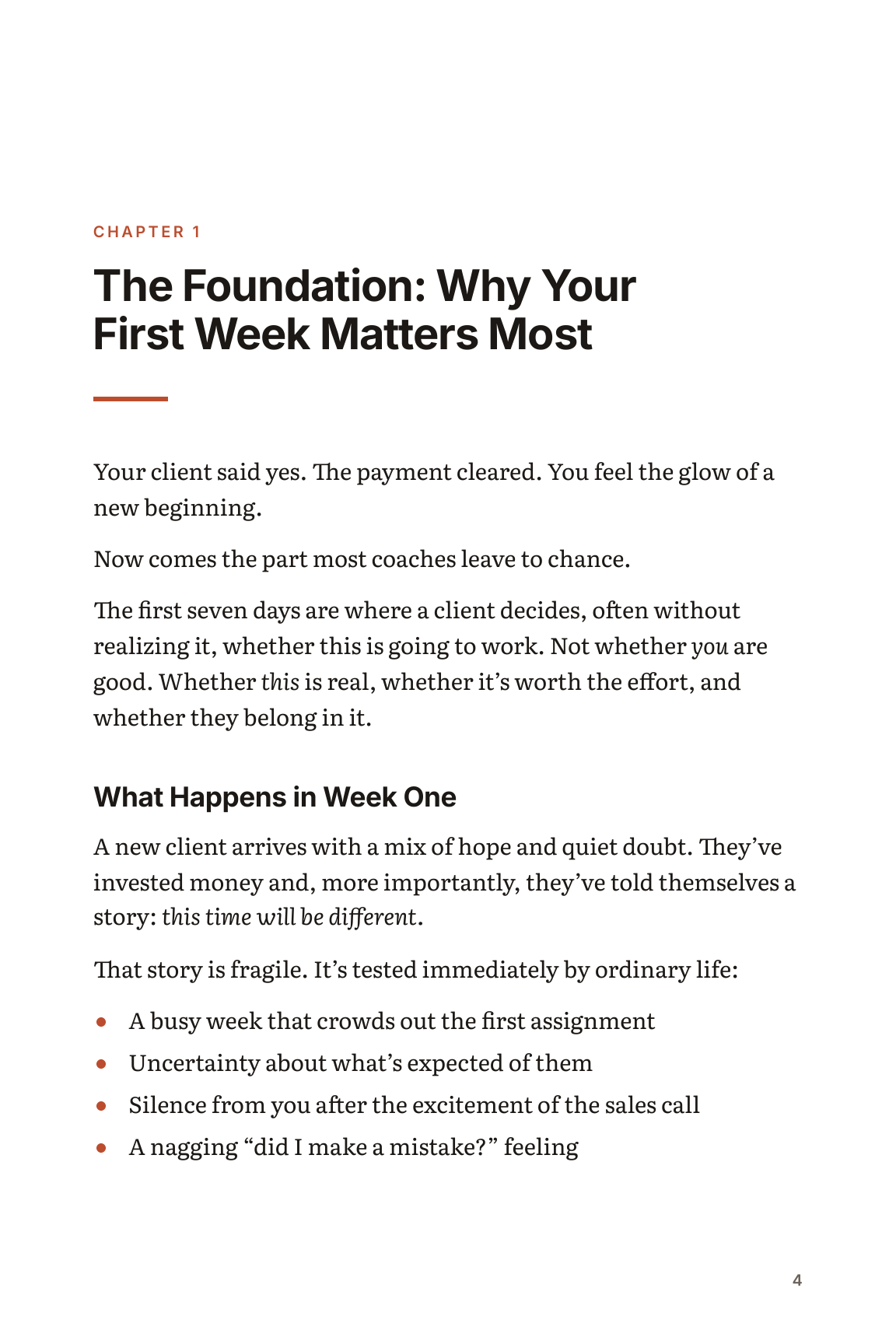
Our First Week of Coaching sample is a real generated book with downloadable files. It demonstrates the output format; it is not a testimonial or proof that a coaching practice converted prospects.
Use it in a real conversation
Give the first version to a small number of suitable readers and ask which instruction was useful or unclear. Revise the guide around what they actually needed. Keep confidential client material out of your inputs unless you have permission and an appropriate basis to use it.