1. Decide what the book replaces
Is it a reference readers keep beside their desk, a workbook they complete during the course, or a standalone introduction? Give it one primary job. A transcript archive has value as a record, but a reader usually needs a clearer sequence than a recording provides.
Choose a bounded part of the course first. A single module with a defined outcome is easier to review than a large manuscript assembled from unrelated lessons.
2. Prepare the source outside the generator
- Export notes or obtain a transcript from your existing teaching or recording tools.
- Keep speaker labels only where they affect the meaning; remove housekeeping and repeated introductions.
- Describe demonstrations in words, including the input, action and result.
- Separate quotations and external references from your own teaching, and check permission to reuse each source.
3. Build chapters around decisions and practice
Create a brief for the reader's level, prerequisites and intended result. Add the prepared material in SuperEbook, choose a suitable format and review the outline. A chapter should introduce a concept, show an example and give the learner something to try.
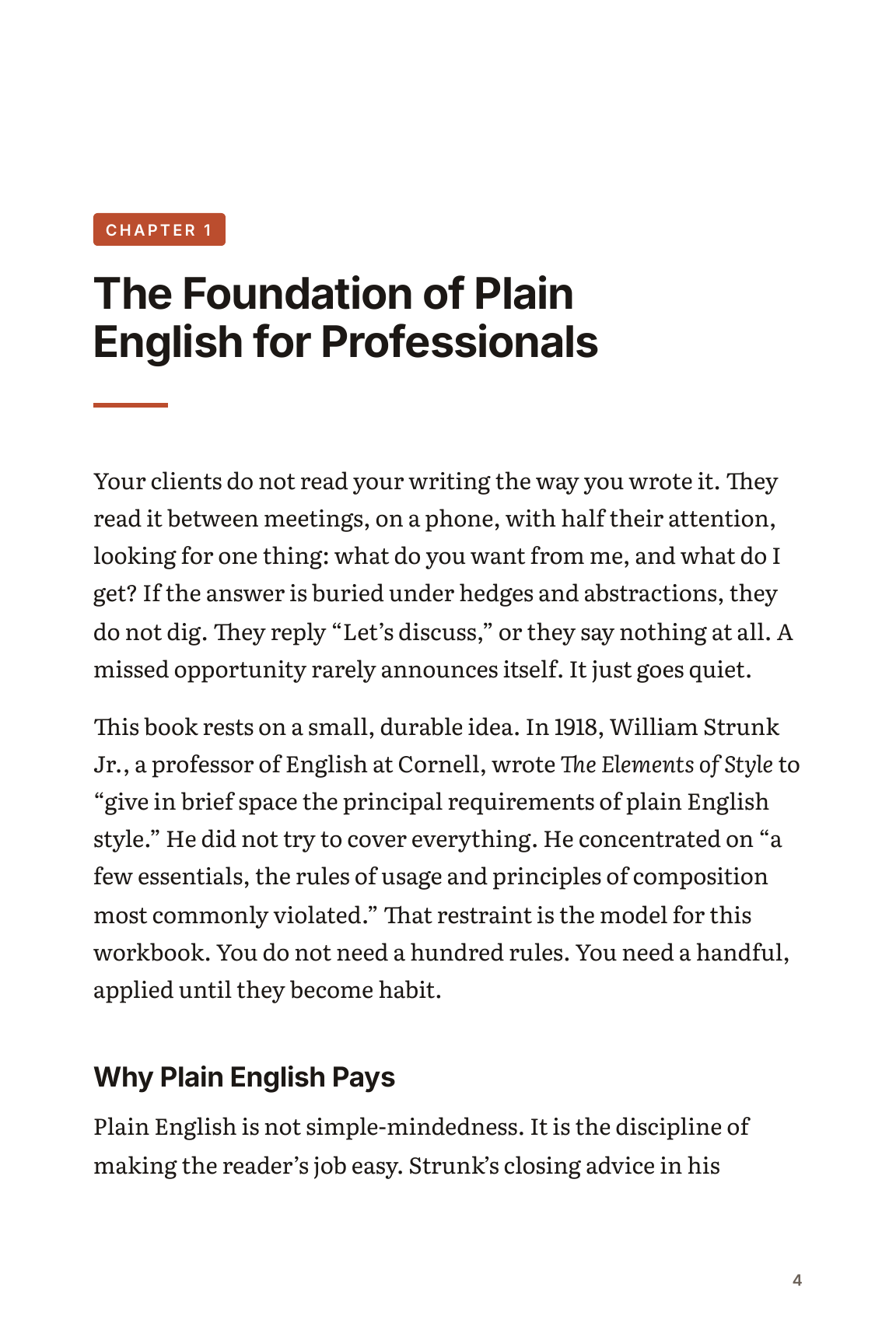
The Strunk workbook provides a real example of adapting source material into exercises. It is based on an older public-domain text, not a modern course platform. Its provenance is visible so you can judge the adaptation for yourself.
4. Complete a learner's review
Try every exercise without looking at your original slides. If an answer depends on a diagram or demonstration that is absent, add it or rewrite the exercise. Verify subject-matter claims against the original sources rather than assuming that fluent text is correct.
Download the PDF and test the answer appendix in a PDF reader. Read the EPUB on a small screen. If you need a different layout or classroom edition, continue editing the DOCX. Keep a versioned copy of the final files so learners receive the edition you reviewed.